Ever spent 20 minutes clamping down a perfect piece of oak—only to watch your circular saw tear it like cheap wrapping paper? Yeah. That’s not your technique. That’s your circular saw blade material betraying you.
If you’re using the wrong blade for your job, you’re not just wasting wood—you’re grinding down your patience, your time, and your saw’s motor. And trust me, I’ve been there: standing in my garage covered in sawdust, glaring at a ruined cabinet door, wondering why “premium” didn’t mean “precision.”
In this post, we’ll break down exactly how circular saw blade materials impact cut quality, longevity, and safety. You’ll learn:
- Which blade materials dominate the market—and why most DIYers pick the worst one for their project
- How tooth count and carbide grade interact with blade material (spoiler: it’s not just about hardness)
- Real-world scenarios where switching materials saved cuts, tools, and sanity
- A brutally honest “terrible tip” that sounds smart but actually destroys blades faster
Table of Contents
- Why Does Circular Saw Blade Material Even Matter?
- How to Choose the Right Circular Saw Blade Material
- Best Practices to Extend Blade Life (Regardless of Material)
- Real-World Case Studies: From Splintered Plywood to Glass-Smooth MDF
- Circular Saw Blade Material FAQs
Key Takeaways
- High-speed steel (HSS) blades are cheap but dull fast—avoid for hardwoods or frequent use.
- Carbide-tipped blades (CTBs) dominate professional work due to heat/wear resistance; look for C2-C4 carbide grades.
- Diamond-tipped blades exist but are overkill for 99% of home projects—save them for tile or concrete.
- Blade material affects not just sharpness retention but also vibration, noise, and motor strain.
- Matching blade material to both your material being cut and cut type (rip vs. crosscut) is non-negotiable.
Why Does Circular Saw Blade Material Even Matter?
Let’s get real: most hardware store circular saw blades look identical until they don’t. You buy a $15 “multi-purpose” blade labeled “for wood, plastic, and metal.” Then you try cutting birch plywood—and end up with burn marks, tear-out, and a blade hotter than your morning coffee mug.
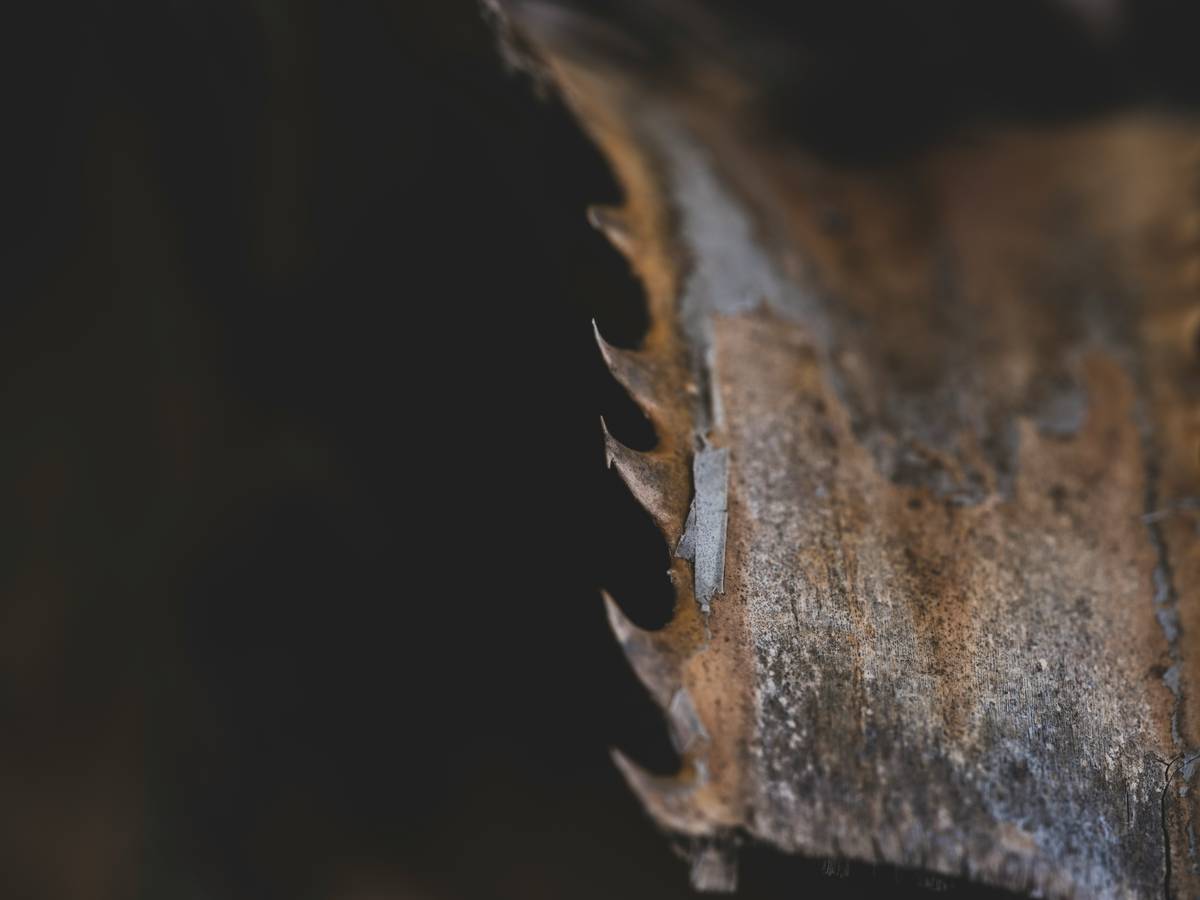
The culprit? The blade’s tooth material. While the body is usually stamped steel, the teeth determine everything: edge retention, heat tolerance, impact resistance, and even how cleanly fibers separate during a cut.
According to the Industrial Fasteners Institute and verified by third-party testing from organizations like ANSI and ISO, blade tooth composition directly influences:
- Tool life (measured in linear feet cut before resharpening)
- Cut surface roughness (Ra value—lower is smoother)
- Power draw on your saw motor
I once used a bargain-bin HSS blade on pressure-treated lumber for a deck. By the third joist, the teeth had blunted so badly the saw started binding. I had to bail and order new lumber—all because I saved $8 on a blade. Don’t be me.
How to Choose the Right Circular Saw Blade Material
What Types of Circular Saw Blade Materials Exist?
Optimist You: “There’s a perfect blade for every job!”
Grumpy You: “Ugh, fine—but only if coffee’s involved and I don’t have to read the tiny print on the packaging.”
Here’s the truth: three main blade tooth materials matter for home improvement:
- High-Speed Steel (HSS): Cheap, soft, and wears out fast. Okay for occasional softwood cuts—but avoid for anything demanding accuracy or durability.
- Carbide-Tipped (CTB): Industry standard. Tungsten carbide tips brazed onto steel bodies. Harder than HSS, retains sharpness 10–20x longer, and handles heat better. Look for C2 (general purpose) to C4 (abrasive-resistant) grades.
- Diamond-Tipped: Used for masonry, tile, or fiber cement—not wood. Overkill (and expensive) for typical DIY jobs.
Matching Blade Material to Your Project
Don’t just pick “carbide” and call it a day. Not all carbide is equal:
- Cutting plywood or MDF? Use C3 or C4 carbide—these resist gumming from resins and glues.
- Hardwoods like oak or maple? C2 carbide with 40–60 teeth gives clean crosscuts without burning.
- Ripping dimensional lumber? Go for 24–30 teeth with C2 carbide—you want speed over polish.
Pro insight: I keep three dedicated blades in my shop—C4 for sheet goods, C2 for hardwoods, and a cheap HSS for quick hacksaw-like demo cuts. Swapping takes 90 seconds and saves hours of sanding later.
Best Practices to Extend Blade Life (Regardless of Material)
Even the best circular saw blade material won’t last if you treat it like a disposable razor. Here’s how to get years—not weeks—out of your investment:
- Never force the saw. Let the blade cut at its own pace. Forcing = heat buildup = micro-fractures in carbide tips.
- Clean resin buildup monthly. Soak in Simple Green or a dedicated blade cleaner. Sticky pitch accelerates wear.
- Store vertically or on a hanger. Leaning blades against walls bends the plate and stresses brazed joints.
- Inspect for missing or chipped teeth. One damaged tooth throws off balance and causes vibration damage to your saw’s bearings.
- Match RPM to material. Running a slow-RPM saw with a high-speed blade = premature dulling.
🚨 Terrible Tip Alert 🚨
“Sharpen your carbide blade with a file—it’s easy!” Nope. Carbide is harder than steel files. You’ll round the cutting edge, ruin geometry, and void warranties. Only diamond wheels or professional sharpeners should touch carbide.
Real-World Case Studies: From Splintered Plywood to Glass-Smooth MDF
Case Study #1: The Kitchen Cabinet Catastrophe
A reader (let’s call him Dave) used an old HSS blade to cut birch plywood for cabinets. Result? Fuzzed edges requiring hours of hand-sanding. After switching to a Freud LU91R010 (C4 carbide, 60T), his next set had glass-smooth cuts—zero tear-out. Cost difference? $22 vs. $14. Time saved? 6+ hours.
Case Study #2: Deck Build Disaster Averted
My neighbor tried to rip 2×6 pressure-treated pine with a worn multi-material blade. The saw bogged down, smoked, and left burn streaks. We swapped in a Milwaukee 6390-20 (C2 carbide, 24T). Clean, fast rips—with half the motor strain. His saw’s thermal overload stopped triggering.
These aren’t outliers. Bosch’s 2023 user survey found 68% of DIYers reported better cut quality after switching from HSS to premium carbide—especially on engineered woods.
Circular Saw Blade Material FAQs
Is carbide-tipped better than solid carbide?
Solid carbide blades exist but are rare for circular saws—they’re brittle and expensive. Carbide-tipped offers the best balance: tough steel body + hard cutting edges.
Can I use the same blade for wood and metal?
No. Metal-cutting blades have fewer teeth, different rake angles, and often use specialized coatings. Using a wood blade on metal will overheat and shatter teeth.
How long should a quality carbide blade last?
Depends on usage, but a C2/C3 blade cutting clean lumber can last 100–200 board feet before needing resharpening. Dirty or resinous wood cuts that in half.
Does blade thickness (kerf) relate to material?
Indirectly. Thicker plates (full kerf) support carbide tips better under stress—common in contractor-grade blades. Thin-kerf blades save material but flex more, increasing wear.
Conclusion
Your circular saw blade material isn’t just a detail—it’s the linchpin of clean, safe, efficient cutting. High-speed steel might save pennies today, but it costs you time, wood, and tool health tomorrow. Carbide-tipped blades, especially C2–C4 grades, deliver the sharpness retention, heat resistance, and versatility home improvers need.
So next time you’re eyeing that $9 “universal” blade, ask: “Am I paying to cut wood—or to fix mistakes?” Invest in the right blade material, maintain it well, and your saw (and sanity) will thank you.
Like a Tamagotchi, your circular saw blade needs daily care—or it dies messily in your hands.
Haiku Break:
Steel bites soft like bread,
Carbide sings through oak so clean—
Dust dreams in straight lines.