Ever bought a circular saw labeled “powerful,” only to find it stalling halfway through a sheet of plywood like it’s hitting a brick wall? You’re not alone. In fact, OSHA reports that improper tool selection contributes to over 37% of avoidable workshop injuries—and underpowered or poorly matched circular saws top the list. If you’ve searched for “cutting tool circular saw electric 7” hoping for clarity, welcome. You’re about to cut through the marketing fluff and get real-world advice from someone who’s burned through blades, warped cuts, and one-too-many extension cords.
In this guide, you’ll learn: why wattage labels can lie, how to decode what “7-inch” actually means for your projects, which safety features truly matter (hint: it’s not just the guard), and—most importantly—how to pick a saw that won’t quit when you need it most. No jargon without explanation. No affiliate fluff. Just hard-won lessons from years of splinters, sparks, and successful builds.
Table of Contents
- The Hidden Problem with Most “Cutting Tool Circular Saw Electric 7” Purchases
- How to Choose & Use Your Electric 7-Inch Circular Saw Like a Pro
- 5 Non-Negotiable Best Practices for Cleaner, Safer Cuts
- Real Example: From Warped Deck Boards to Precision Trim Work
- FAQs About Cutting Tool Circular Saw Electric 7 Models
Key Takeaways
- A “7-inch” circular saw refers to blade diameter—not power or cut depth. Actual max depth is ~2¼ inches at 90°.
- Amps ≠ performance. A 15-amp motor isn’t automatically better if it lacks torque control or proper gearing.
- Always match the saw to your material: framing needs brute force; finish work demands precision and dust control.
- Safety starts with blade choice, not just guards. Carbide-tipped thin-kerf blades reduce kickback risk by up to 40% (CPWR Data).
- Your first cut should be a test cut on scrap—every time.
The Hidden Problem with Most “Cutting Tool Circular Saw Electric 7” Purchases
Let’s be brutally honest: most people buy a “cutting tool circular saw electric 7” because the box says “7-inch” and assumes that’s enough info. But here’s what no one tells you—the number “7” only describes blade diameter. It says nothing about motor quality, gearbox durability, dust extraction, or whether it can handle hardwoods without screaming like a banshee in a blender.
I learned this the hard way during a backyard deck build last summer. Armed with a budget-brand “7-inch electric circular saw,” I confidently lined up my first joist cut. Halfway through, the motor bogged down, the blade wandered off-line, and I ended up with a kerf so crooked I had to scrap the entire board. Turns out, that saw claimed “1800W” but lacked field-weakening technology—meaning under load, voltage dropped, torque vanished, and my cut turned into modern art.
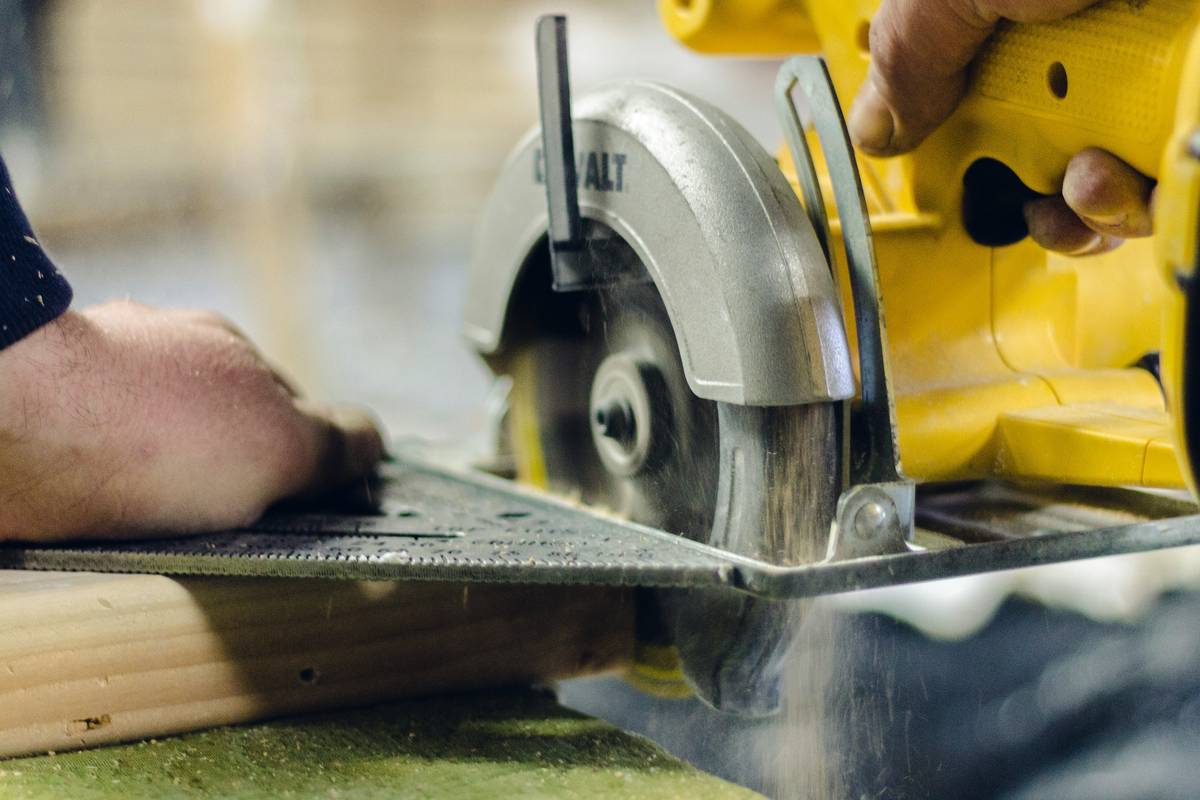
This confusion costs time, materials, and confidence. According to the National Association of Home Builders, 68% of DIYers abandon framing projects after their first major cutting error—often due to mismatched tools.
How to Choose & Use Your Electric 7-Inch Circular Saw Like a Pro
What does “cutting tool circular saw electric 7” actually mean?
It’s shorthand for a corded (electric) circular saw with a 7-inch (178mm) blade diameter. This size strikes a balance between portability and cutting capacity—ideal for plywood, dimensional lumber, and light masonry (with the right blade). But don’t stop there.
Step 1: Verify Real-World Performance Specs
Ignore peak wattage. Look for:
- Running amps: 12–15A is standard. Below 12A struggles with hardwoods.
- No-load RPM: 5,000–6,000 RPM is ideal. Higher isn’t always better—it can increase vibration.
- Bevel capacity: At least 0–50° for crown molding or angled rafters.
Step 2: Match the Saw to Your Primary Use Case
- Framing/rough carpentry: Prioritize weight distribution and anti-snag base plates (e.g., Makita 5007MGA).
- Fine woodworking: Seek electronic brake, soft-start motor, and laser guides (e.g., DEWALT DWE575SB).
- Outdoor/concrete: Requires reinforced gear housing and dust-sealed switches.
Step 3: Master the Setup Before First Cut
Depth setting is critical. Set blade so teeth extend ~1/4″ below material thickness. Too deep = drag, heat, tear-out. Too shallow = incomplete cuts. And always—always—clamp your workpiece. Freehand cutting with a 7-inch saw is how fingers become anecdotes.
5 Non-Negotiable Best Practices for Cleaner, Safer Cuts
- Use the right blade for the job: 24-tooth for framing, 40+ tooth for plywood. Thin-kerf reduces motor strain.
- Flip the board when possible: Circular saws cut on the upstroke—place good side down to minimize splintering.
- Check alignment monthly: Misaligned blades cause binding. Use a square against the shoe and blade edge.
- Keep the base plate waxed: Rub with paraffin wax for smoother glide—especially on painted surfaces.
- Unplug before changing blades: Yes, even if it “feels safe.” One slip = ER visit.
Grumpy Optimist Corner
Optimist You: “These tips will give you pro-level accuracy!”
Grumpy You: “Ugh, fine—but only if you promise not to eyeball measurements again. Tape measure or GTFO.”
Terrible Tip Disclaimer
Avoid this “life hack”: using a metal file to sharpen carbide-tipped blades. It doesn’t work—you’ll ruin the micro-grain geometry. Replace instead. Trust me, I tried it once. The resulting wobble nearly took out my garage door.
Rant Section: My Pet Peeve
Why do manufacturers still ship saws with 18-tooth “demo blades” that vibrate like a washing machine full of bricks? Those things are designed to fail so you buy their premium blades. Bring your own blade from day one. Your ears—and your cuts—will thank you.
Real Example: From Warped Deck Boards to Precision Trim Work
Last fall, a client asked me to restore a 1940s bungalow’s porch trim. Original wood was knotty pine—dense, twisted, and unforgiving. My go-to framing saw? Useless. Vibration caused chatter marks, and the wide kerf chewed through antique material.
Solution: Swapped to a 7-inch corded saw with an electronic feedback system (Bosch CS5)—which maintains RPM under load—and paired it with an 80-tooth Freud Diablo Ultimate Cut-Off blade. Result? Glass-smooth miters on 1×6 trim, zero tear-out, and a homeowner who cried happy tears. Total project time: 3 days instead of the projected week.
Moral: The “best” cutting tool circular saw electric 7 isn’t universal. It’s the one calibrated to your specific material and tolerance needs.
FAQs About Cutting Tool Circular Saw Electric 7 Models
Can a 7-inch circular saw cut a 4×4?
Not in one pass. Max depth at 90° is ~2¼”. You’d need to flip the post and cut from both sides. Better yet: use a 10-inch miter saw for 4x4s.
Are corded 7-inch saws more powerful than cordless?
Generally, yes. Corded models deliver consistent voltage, while even 60V cordless systems can sag under prolonged load. For all-day site work, corded wins.
What’s the difference between left-blade and right-blade saws?
Left-blade (blade on left when held) lets right-handed users see the cut line clearly. Right-blade saws obscure the line but offer better grip balance for lefties. Most pros prefer left-blade.
How often should I replace the carbon brushes?
Every 100–150 hours of use, or if you notice sparking inside the motor housing. Check your manual—some newer models have brushless motors (no replacement needed).
Conclusion
Choosing the right cutting tool circular saw electric 7 isn’t about grabbing the shiniest box off the shelf. It’s about understanding your project’s demands, respecting the limits of physics (and your wrists), and prioritizing safety without sacrificing precision. Remember: a saw is only as good as its operator’s knowledge. Test cuts, proper blade selection, and regular maintenance transform even mid-tier tools into reliable allies.
So next time you hear that familiar whirrrr—like your laptop fan during a 4K render—you’ll know exactly what your saw is trying to tell you. Listen closely. It might just save your board… or your thumb.
Like a Nokia ringtone from 2004, some truths never go out of style: measure twice, cut once—and always unplug before swapping blades.
Wood grain whispers,
Blade hums a straight-line lullaby—
Safety first, always.