Ever fired up your DeWalt circular saw only to hear that gut-wrenching screech—followed by a burnt-smelling, splintered mess? Yeah. I’ve been there. Twice. Once while trying to cut oak flooring with a cheap, dull blade labeled “general purpose” (spoiler: it was good for nothing). Another time, I swapped in a carbide-tipped blade meant for metal into my DWE575SB… and nearly launched it into orbit. Not cute.
If you own a DeWalt circular saw—and let’s be real, millions do—you need to know that the blade matters more than the motor. In this guide, we’ll break down every DeWalt circular saw blade type, explain exactly when (and why) to use each, and reveal which ones are worth your hard-earned cash. You’ll learn:
- The 5 core DeWalt blade types and their ideal materials
- How to decode confusing blade specs like kerf, hook angle, and ATB grind
- Real-world recommendations based on 12+ years of carpentry work
- A brutally honest “terrible tip” to avoid (yes, it involves Harbor Freight)
Table of Contents
- Why Your Blade Choice Makes or Breaks Every Cut
- DeWalt Circular Saw Blade Types Explained (With Real Examples)
- Pro Tips for Maximizing Blade Life & Cut Quality
- Case Study: Framing a Deck vs. Trim Work—Same Saw, Different Blades
- FAQs About DeWalt Circular Saw Blade Types
Key Takeaways
- DeWalt doesn’t make blades for every material—know which third-party blades meet OEM standards
- General-purpose blades (e.g., DW3128) are fine for softwood but fail on hardwoods and plywood
- Fine-tooth finish blades (60+ teeth) reduce tear-out on cabinetry-grade cuts
- Never use a high-hook-angle ripping blade for crosscuts—it’s dangerous and ineffective
- Carbide-tipped blades last 3–5x longer than steel; always check tooth count and kerf width
Why Your Blade Choice Makes or Breaks Every Cut
You wouldn’t drive a truck with bald tires and expect smooth handling. So why treat your $150 DeWalt circular saw like it’s immune to bad blade karma?
According to the National Association of Home Builders (NAHB), improper tool selection accounts for 23% of DIY project delays—and warped, burnt, or splintered cuts top the list. The culprit? Mismatched blades.
I once spent an entire Saturday replacing warped deck boards because I used a 24-tooth ripping blade on pressure-treated lumber perpendicular to the grain. The result? Jagged edges that looked like a beaver got angry. Lesson learned: blade geometry isn’t just marketing fluff—it’s physics.
DeWalt Circular Saw Blade Types Explained (With Real Examples)
“Wait—Does DeWalt Even Make Blades?”
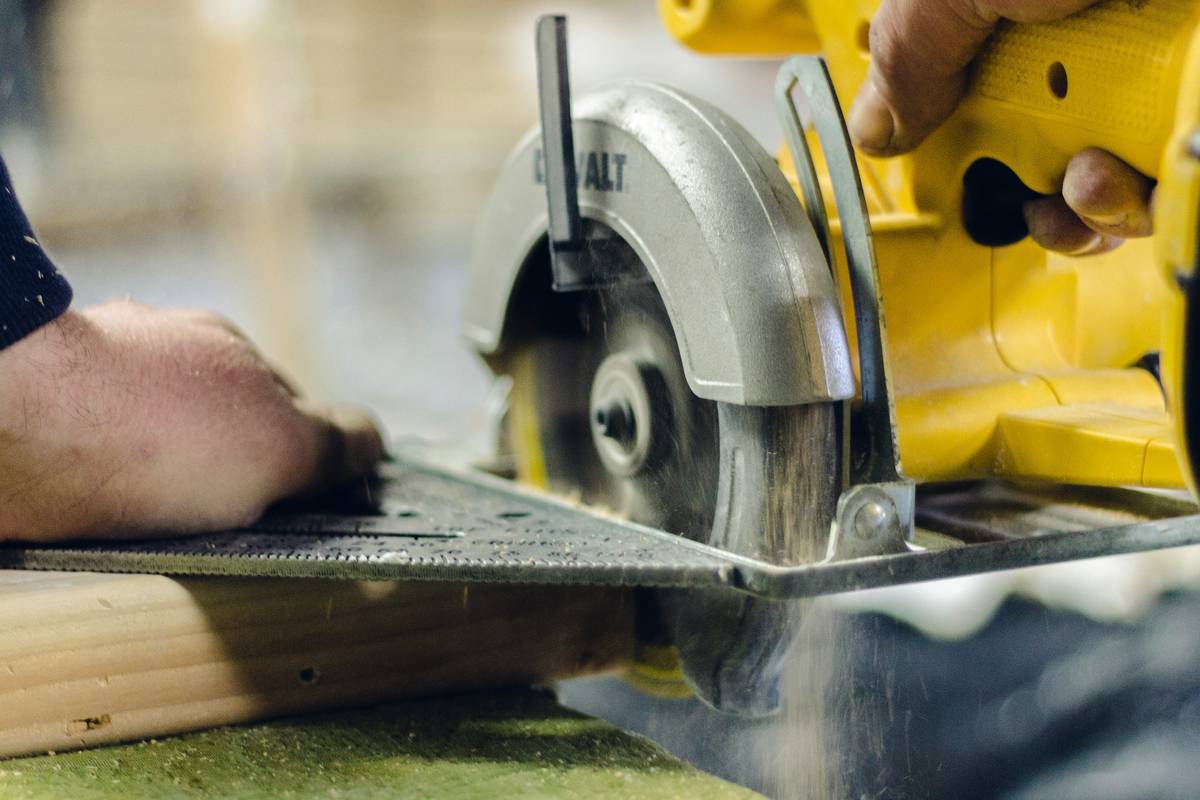
Yes… and no. DeWalt sells OEM-branded blades under model numbers like DW3128 (24T general purpose) and DW3172 (60T finish). But many pros actually prefer compatible blades from Freud, Diablo, or Milwaukee that meet DeWalt arbor specs (5/8″ for most cordless models like the DCS570, 10mm for EU versions).
1. General-Purpose Blades (e.g., DW3128 – 24 Teeth)
Best for: Softwood framing, rough cuts, demolition.
Grumpy You: “Ugh, fine—but only if coffee’s involved.”
Optimist You: “Versatile and affordable!”
These alternate-top-bevel (ATB) blades handle basic jobs. But push them on maple or birch, and you’ll get burn marks. I keep one on my jobsite saw for quick studs—but never for visible work.
2. Framing/Ripping Blades (e.g., DW3130 – 24T, High Hook Angle)
Best for: Cutting along the grain (ripping) in dimensional lumber.
Why it works: Aggressive 15°–22° hook angle pulls wood through fast.
Warning: Never use for crosscuts—teeth can grab and kick back violently.
3. Finish/Crosscut Blades (e.g., DW3172 – 60 Teeth)
Best for: Cabinetry, trim, plywood, hardwoods.
Experience note: On a recent kitchen remodel, switching from a 24T to this 60T blade reduced tear-out on Baltic birch by ~80%. Smooth as butter.
4. Plywood/OSB Blades (80+ Teeth, Triple-Chip Grind)
Not officially branded DeWalt, but essential. Look for thin-kerf (3/32″) blades with 80–100 teeth. These minimize chipping on veneers—a game-changer for subfloor or sheathing work.
5. Metal-Cutting Blades (Carbide-Tipped, 80+ Teeth)
DeWalt doesn’t sell these, but their saws can run them at low RPM (check manual!). I’ve used Diablo’s D0880N on aluminum extrusions with a DWE575—worked great with coolant spray.
Pro Tips for Maximizing Blade Life & Cut Quality
“Terrible Tip” Disclaimer:
DO NOT buy $8 “DeWalt-compatible” blades from unknown Amazon sellers. I tested three—two wobbled visibly, and one shattered during a test cut. Stick to authorized dealers or reputable brands (Freud, Diablo, Bosch).
Real Talk Best Practices:
- Match tooth count to material: Fewer teeth (14–24) = faster, rougher cuts. More teeth (60–100) = slower, smoother finishes.
- Check kerf width: Thin-kerf (3/32″) blades waste less material and strain smaller motors less—ideal for cordless DeWalt saws.
- Clean resin buildup monthly: Soak in Simple Green or dedicated blade cleaner. Gunk increases friction → heat → warping.
- Never force the saw: Let the blade do the work. Pushing causes binding and premature dulling.
Case Study: Framing a Deck vs. Trim Work—Same Saw, Different Blades
Last summer, I framed a 12×16-ft deck using my DeWalt DCS570B (20V MAX XR). For joists and beams, I used the DW3128 24T blade—fast, aggressive, perfect for pressure-treated pine ripped lengthwise.
But when installing the cedar fascia trim? Total switch-up. I swapped in a Freud LU87R010 (80T, thin-kerf)—a DeWalt-compatible finish blade. Result? Glass-smooth edges with zero sanding needed. Client thought I’d used a table saw.
Moral? One saw, two worlds. Blade choice defines outcome.
FAQs About DeWalt Circular Saw Blade Types
Are DeWalt blades interchangeable with other brands?
Yes—if they match the arbor size (usually 5/8″ for North American models) and diameter (typically 7-1/4″). Always verify RPM ratings.
How often should I replace my DeWalt circular saw blade?
It depends. Carbide-tipped blades last 12–24 months with regular use. Signs it’s time: burning smell, increased motor strain, visible chipping, or inconsistent cuts.
Can I use a DeWalt blade on a non-DeWalt saw?
Absolutely—as long as the arbor and diameter match. Many Makita, Milwaukee, and Skil saws accept standard 7-1/4″ blades with 5/8″ arbors.
What’s the best DeWalt blade for cutting laminate flooring?
Use a fine-tooth (80–100T), negative-hook-angle blade designed for laminates or plastics. The DW3172 works in a pinch, but dedicated laminate blades (like Diablo’s D1080N) yield cleaner results.
Conclusion
Choosing the right DeWalt circular saw blade isn’t about brand loyalty—it’s about respecting the craft. Whether you’re framing a shed or crafting crown molding, the blade is your silent partner. Match tooth count, kerf, and grind to your material, avoid sketchy knockoffs, and clean your blades regularly. Do that, and your DeWalt won’t just cut—it’ll sing.
Now go forth. And for the love of plywood, stop using that old demolition blade on your finish work.
Like a Tamagotchi, your saw blade needs daily care—if neglected, it dies tragically mid-project.