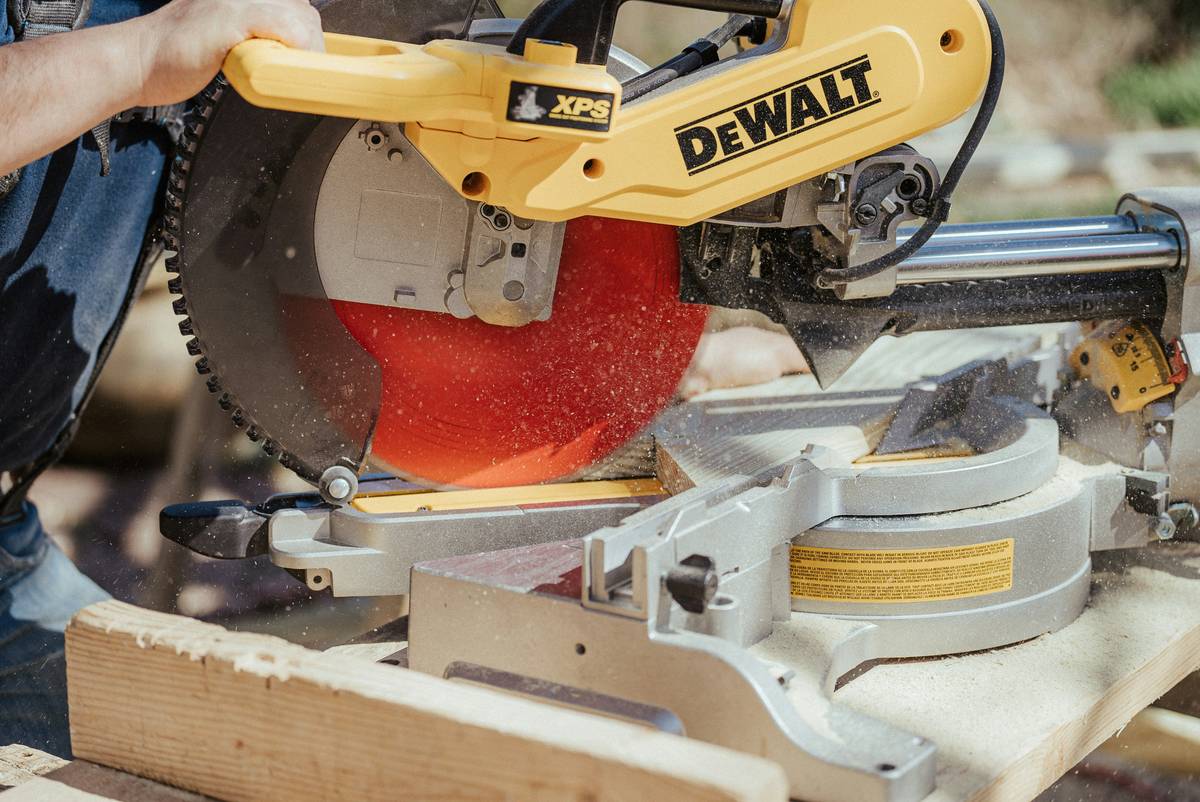
Ever stood in your garage holding two mismatched pieces of 2×4, wondering why your “straight” cut looks like a toddler drew it with crayons? Yeah. We’ve all been there—especially before we truly understood: cutting tool circular saw what is… really?
This isn’t just about spinning metal. A circular saw is the backbone of DIY framing, deck building, and even fine woodworking—if you know how to wield it. In this guide, you’ll learn exactly what a circular saw is (beyond “that loud thing in Dad’s shed”), how it differs from jigsaws or miter saws, why blade choice makes or breaks your cut, and real-world tips that come from years of splinters, near-misses, and one memorable incident involving a warped plywood sheet and a cup of cold coffee.
You’ll walk away knowing how to pick, use, and maintain a circular saw like a pro—not a YouTube hopeful.
Table of Contents
- What Is a Circular Saw—Really?
- How to Use a Circular Saw Without Losing Fingers
- Best Practices for Clean, Straight Cuts
- Real-World Case Study: From Job Site to Garage
- Circular Saw FAQs
Key Takeaways
- A circular saw is a handheld power tool with a toothed circular blade driven by an electric motor—designed for straight, fast cuts in wood, plastic, metal, and more.
- Blade diameter (typically 6.5” or 7.25”) determines depth of cut; RPM ranges from 4,000–6,000+ depending on model.
- Safety features like blade guards, electric brakes, and riving knives are non-negotiable for trustworthiness and control.
- Using a straightedge guide + sharp blade = professional results. Freehand cutting? Only for firewood.
- Corded models offer consistent power; cordless give mobility—but check voltage (18V vs. 20V Max matters).
What Is a Cutting Tool Circular Saw—Really?
Let’s clear the sawdust: a cutting tool circular saw is a portable power tool featuring a rapidly rotating toothed disc (the blade) that slices through materials via sheer mechanical force. Unlike reciprocating saws (which jab back-and-forth) or band saws (continuous loop), the circular saw’s motion is consistent, unidirectional spin—making it ideal for long, straight cuts at speed.
Invented in the late 18th century but popularized post-WWII with the rise of affordable housing, today’s circular saws come in corded, cordless, worm-drive, and hypoid variants. The standard DIY model uses a 7.25-inch blade running at ~5,800 RPM—enough to slice cleanly through 2.5 inches of dimensional lumber in seconds.

Confessional fail: My first “deck” used warped 2x6s I cut freehand with a $49 circular saw from Big Box Store #3. Half the joists were crooked. Bees moved in by July. Moral? Understanding the tool > owning the tool.
How to Use a Circular Saw Without Losing Fingers
Optimist You: “Just plug it in and go!”
Grumpy You: “Ugh, fine—but only if my blade guard snaps back before I start crying.”
Here’s how to actually do it right:
Step 1: Choose the Right Blade
Not all blades are created equal. For clean crosscuts in plywood, use a 40–80 tooth ATB (Alternate Top Bevel) blade. For rough framing? A 24-tooth framing blade tears through green lumber fast. Wrong blade = tear-out city.
Step 2: Set Depth & Bevel
Adjust the base plate so the blade extends no more than 1/4 inch below the material. Deeper = more vibration, less control. Want a 45° angle? Unlock the bevel scale and lock it tight.
Step 3: Use a Straightedge Guide
Tape measure + pencil ≠ straight line under pressure. Clamp a level, aluminum ruler, or dedicated saw guide (like the Kreg Rip-Cut) to your workpiece. Align the saw’s base plate—not the blade—to the guide.
Step 4: Let the Saw Do the Work
Don’t force it. Apply steady pressure and let the motor pull through. If it bogs down, ease off—you’re either dull, overloaded, or using a 12-gauge extension cord (bad idea).
Best Practices for Clean, Straight Cuts
Here’s what separates weekend warriors from workshop legends:
- Sharp blades only. A dull blade burns wood, increases kickback risk, and sounds like your laptop fan during a 4K render—whirrrr-grind-whine.
- Support the workpiece fully. Never let material hang off a sawhorse mid-cut. It binds, binds = kickback.
- Start with the blade spinning. Plunge-starting causes stalling and uneven cuts.
- Wear safety glasses + hearing protection. OSHA doesn’t care how “quick” the cut is.
- Clean the shoe/base plate monthly. Pitch buildup shifts alignment over time.
Terrible Tip Alert: “Just eyeball the cut line—it’ll be fine!” Nope. Even pros use guides. Your future self (and your sheetrock guy) will thank you.
Rant Section: My Pet Peeve?
People who disable the blade guard “to see better.” STOP. That spring-loaded shield saves fingers when the blade binds—which happens faster than your brain can react. Keep it functional. Period.
Real-World Case Study: From Job Site to Garage
Last summer, I helped a friend build a backyard shed. He’d bought a new DeWalt DWE575SB (7.25”, 15-amp corded). First day: he tried cutting OSB panels freehand. Result? Jagged edges, misaligned walls, and a trip to Home Depot for replacement sheets.
We switched tactics:
- Installed a Freud 40T carbide blade ($35)
- Built a quick fence from scrap 1x3s clamped to the panel
- Set depth to 1/4” below OSB thickness
- Made relief cuts at corners to prevent tear-out
Outcome? Walls went up square. Door fit perfectly. And—chef’s kiss—the whole thing passed county inspection on the first try.
Circular Saw FAQs
What’s the difference between a circular saw and a skill saw?
“Skil Saw” was the original brand name (like Kleenex for tissues). Today, all handheld circular saws are functionally “Skil saws,” though Skil still makes them. Technically, they’re the same tool type.
Can I cut metal with a circular saw?
Yes—but ONLY with a metal-cutting blade (carbide-tipped or abrasive) and appropriate speed control. Never use a wood blade on metal—it shatters.
How deep can a 7.25-inch circular saw cut?
At 90°, most cut ~2.5 inches deep. At 45°, ~1.875 inches. Check your manual—blade arbor size affects max depth.
Are cordless circular saws powerful enough?
Modern 18V/20V Max models (like Makita XSH06Z) rival corded in burst power—but for heavy-duty or all-day use, corded wins for sustained torque.
Conclusion
So—cutting tool circular saw what is? It’s not just a spinning disc. It’s a precision instrument disguised as brute-force hardware. When respected, maintained, and used with intention, it delivers accuracy that rivals stationary tools—all while fitting in your trunk.
Remember: the best saw isn’t the loudest or cheapest. It’s the one you understand, trust, and pair with the right blade and guide. Now go make that cut—clean, safe, and straight.
Like a Tamagotchi, your circular saw needs daily care. Feed it sharp blades, don’t let it cry (grind), and it’ll outlive your next three smartphones.
Wood grain swirls,
Blade hums through pine like butter,
Sawdust dreams begin.